Shri Neem Karori Baba (Maharaj‑ji)
The divine life of the saint who taught the world to love, serve, and remember.

Birth and Early Childhood
Maharaj‑ji was born as Laxmi Narian in a well‑to‑do Brahmin family in Akbarpur, District Agra. From birth he exhibited spiritual powers; though he showed no interest in formal schooling, he seemed to know everything.
At the age of eleven, he warned his family that robbers would break in that night. Dismissed as a child’s fancy, his prediction came true exactly. This was his first recorded miracle.
Renunciation & Early Spiritual Travels
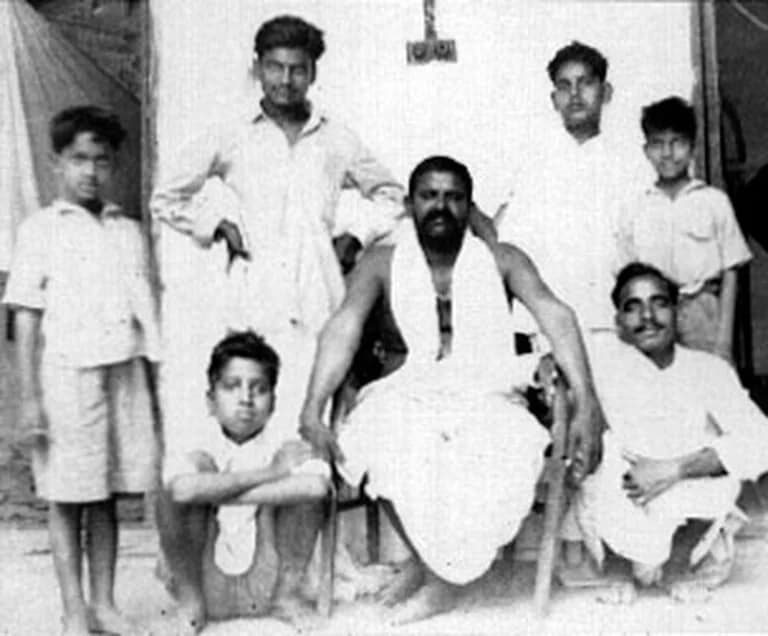
At eleven, he left home and wandered to Gujarat, living for seven years in an ashram of a Vaishnav saint. There he was initiated as an ascetic and given the name Lakshman Das. He wore matted hair, a loincloth, and carried only a water pot.
In Babania, he practised severe austerities, including long immersions in a lake. Even then, his divine presence began attracting devotees.
The Neeb Karori Years (18 Years)
Arriving in the village of Neeb Karori (Farrukhabad), he accepted the villagers’ request to stay. They built him an underground cave where he remained immersed in meditation all day, emerging only at night. When the cave collapsed, a new one was dug, and on its roof he had a Hanuman temple constructed.
On the day of the temple’s consecration, he shaved his matted hair and began wearing a dhoti. He played hide‑and‑seek with village boys (finding anyone instantly, yet turning invisible when hiding), climbed trees in impossible ways, and once was discovered with serpents coiled around his body in meditation.
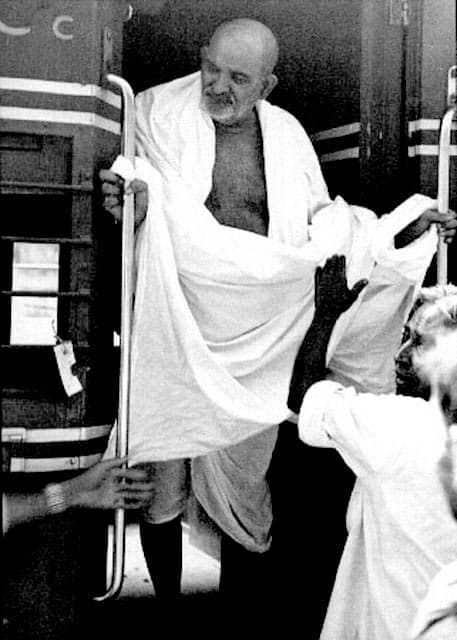
A train stopped 200 metres away simply to let him board; later the Indian government named a railway station “Baba Lakshman Das Puri” in his honour. On another occasion, a conductor ordered him off a first‑class compartment – then the train refused to move until he re‑boarded. From that day he was famously known as “Baba Neeb Karori.”
Wanderings, Kilaghat, and Growing Fame
After leaving Neeb Karori in 1935, he lived at Kilaghat (Fatehgarh) on the Ganges bank, where he reared cows that miraculously obeyed his commands. There he gave darshan to many soldiers and transformed the heart of Colonel J.C. McKenna, his first Western devotee.
He then wandered continuously. Devotion to him grew spontaneously in Bareilly, Haldwani, Almora, Nainital, Kanpur, Lucknow, Vrindavan, Allahabad, Delhi, Shimla, and even Madras. He never sought followers; they came.
The Golden Era in the Hills (1940s–1970s)
In the 1940s, Baba spent much time in Nainital, where townspeople abandoned their chores to follow him. He often stayed in devotees’ homes or on Manora hillside. In the early 1950s, he built his first temple, Hanumangarh, on that hill. Over the next two decades, he established temples and ashrams in Bhumiadhar, Kainchi, Kakrighat, Kanpur, Lucknow, Vrindavan, Shimla, and Delhi. Remarkably, he immediately handed over each completed temple to a trust – he had no attachment to buildings.
He made special arrangements for women in his ashrams, allowing them to participate fully in service. Daily bhandara (feeding) never ran short, and he taught: “If you do not empty the stock, how can it be replenished?”
Dignitaries including former President V.V. Giri, former Prime Minister Jawahar Lal Nehru, and industrialist Jugal Kishore Birla came for his darshan. He treated all – rich and poor, Indian and Western – with the same boundless love.
Mahasamadhi – The Final Lila
In the months before he left, Baba gave many hints. In 1972 he asked a devotee, “Where should I leave my body?” Two months prior, he said, “I have been transferred; I must go.” He told Western devotees, “I am going to be released from Central Jail today.”
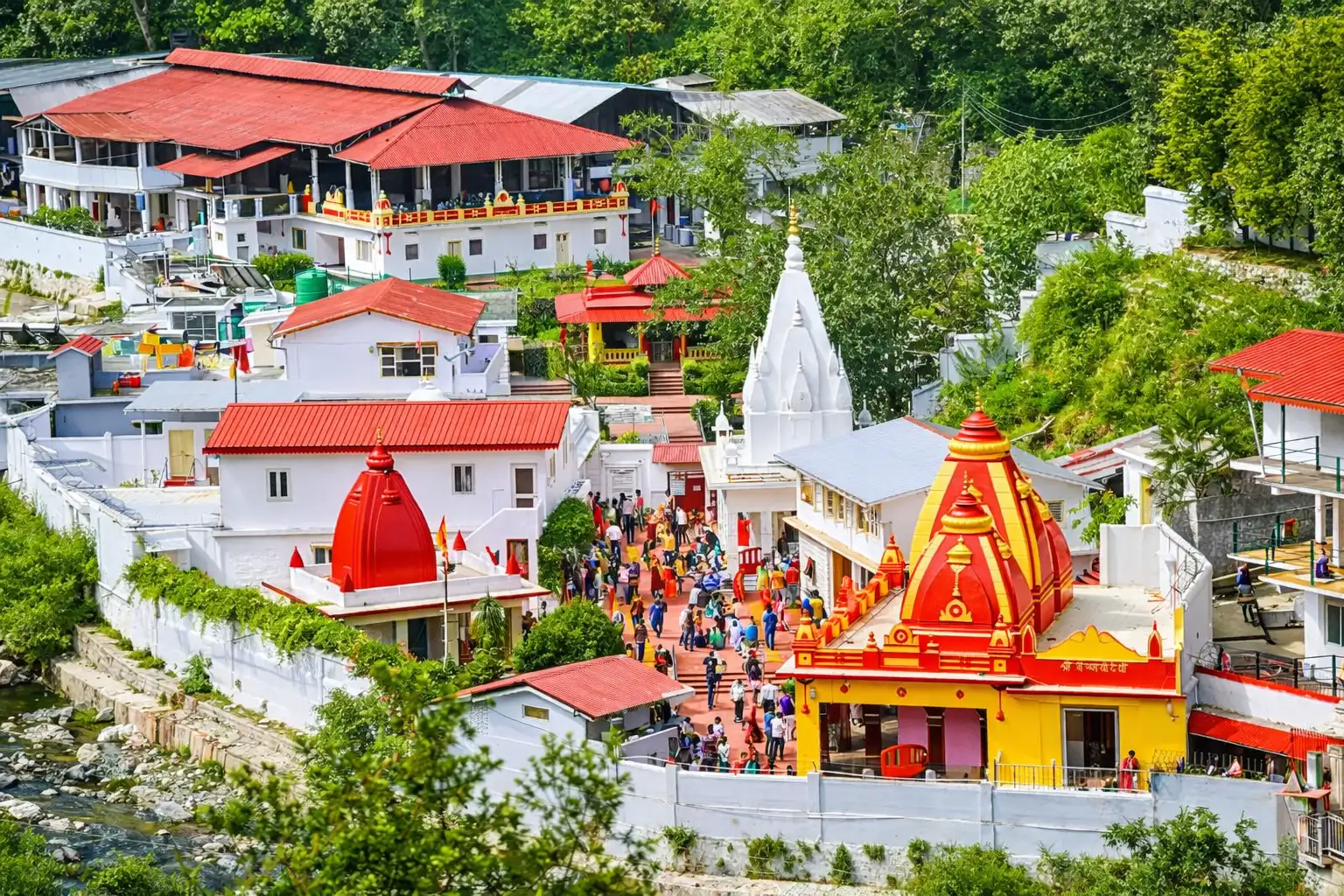
On 9th September 1973, a rainbow filled the sky as he departed Kainchi. He travelled to Agra, then to Vrindavan where he was admitted to hospital. At 1:15 a.m. on 11th September, he removed his oxygen tube, whispered “It is all useless,” repeated“Jagdish, Jagdish, Jagdish”, and his body became still.
His body was cremated inside his Vrindavan ashram. A storm raged during preparations, ceasing only when Sri Ma arrived. As the pyre was lit, the saint Devraha Baba declared: “Baba’s death was not a reality. He is alive and will ever remain so.”
His Continuing Presence
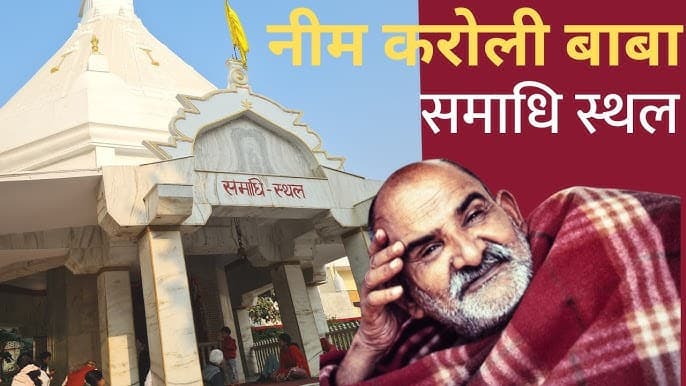
Even after Mahasamadhi, Baba continues to appear to devotees in dreams, as a sadhu, a taxi driver, or an old village woman, healing incurable diseases and guiding lives. His love is undiminished.
As Rajida (Ravi Prakash Pande) wrote: “Baba took care of me and he still does.”
His Core Message
“Love everyone, serve everyone, remember God.” — Maharaj‑ji
Explore His Full TeachingsBaba Neem Karori Jyotish Seva Sansthan
This website is maintained by the Baba Neem Karori Jyotish Seva Sansthan, a registered charitable trust dedicated to spreading Maharaj‑ji’s teachings through Vedic astrology, daily horoscope, and spiritual service. The trust operates from Lucknow, India, and is committed to offering free or low‑cost astrological guidance, preserving ancient scriptures, and serving the underprivileged through education, health, and community initiatives.
Learn more about the Sansthan